

 Desert Safari
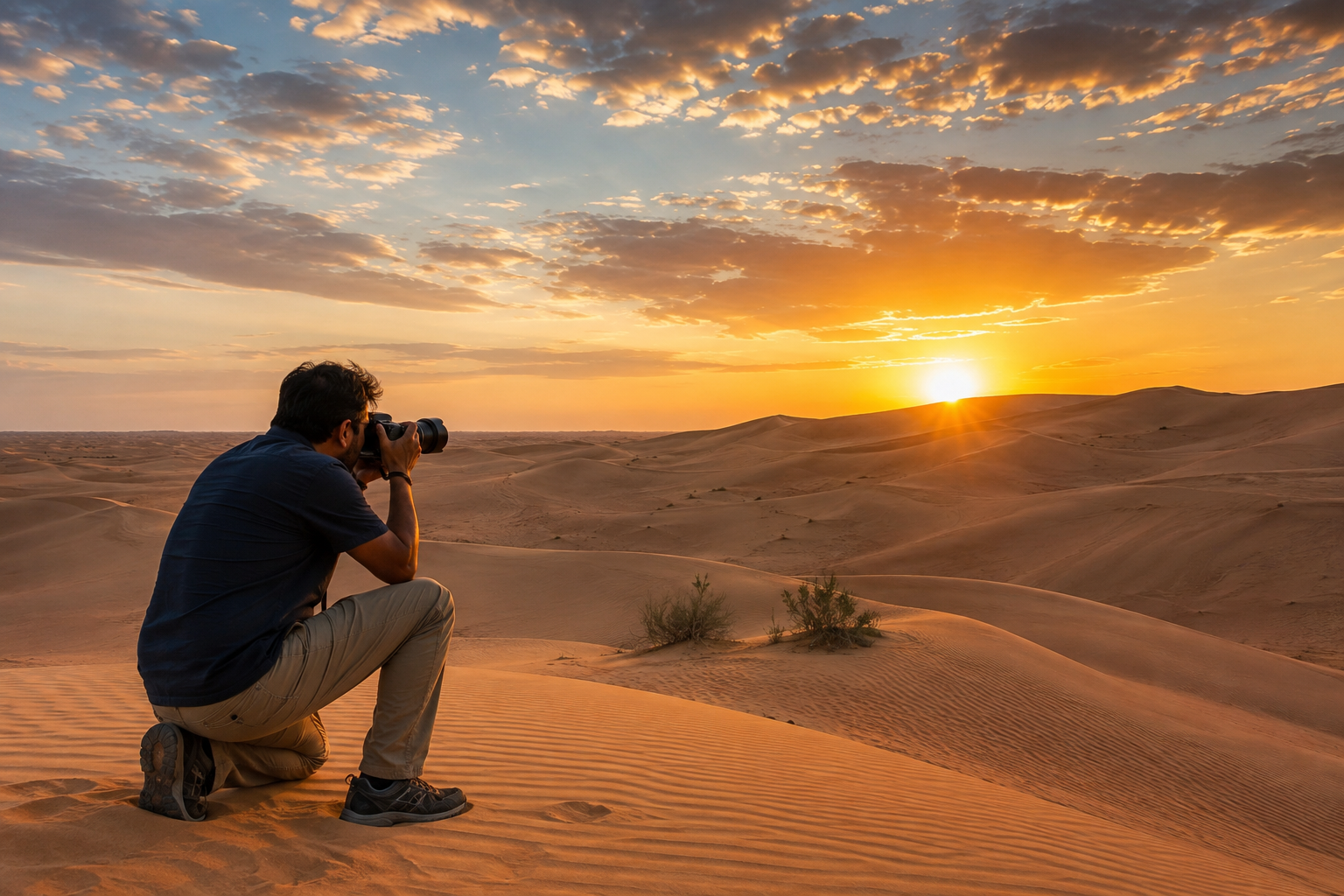
Desert safari photography in Abu Dhabi is a great way to capture dramatic dunes, golden sunsets, traditional desert experiences, and unforgettable travel moments. With the right lighting, camera angle, and composition, desert safari photography can produce impressive images whether you use a professional camera or smartphone.
If you are planning your first trip, start by exploring our Best Desert Safari in Abu Dhabi
Choose the Right Time for Photography
Desert lighting situations can totally transform all visual aspects. Usually early morning and late afternoon light gives you the longest shadows with more texture on the dunes and softer illumination.
If you want to photograph different lighting conditions, it can be useful to understand the difference between safari schedules. Our Evening vs Morning Desert Safari in Abu Dhabi guide explains the main differences
The day brings late afternoon specifically helpful to photographers as the changing sunlight develops new shadows and colours while functioning throughout the experience.
Use the Dunes to Create Depth
Sometimes large desert landscapes look flat in photos. Use the natural lines and shadows of the dunes to create a sense of perspective and avoid this flatness in your photos.
When watertaken every picture at the eye level, try to reposition yourself. A low-angle shot makes a dune looks much bigger while a high-angle shot tells us about the different patterns created by the sand on top.
Dune ridges create leading lines. Footprints, vehicle tracks, together with natural patterns direct the gaze toward the main subject.
Make the Most of Golden Hour
Desert photography presents its best opportunity at golden hour. When the sun moves toward the horizon it creates warmer hues in the sand and longer shadows which show off the dunes’ form.
For more detailed and dimensional shots make your camera face the dunes and shoot the sun rays illuminating the landscape instead of shooting the sun directly. The outcome often contains extra detail and dimension.
For visitors who want to understand the overall safari experience before planning their photography trip, our Ultimate Abu Dhabi Desert Safari Guide
Photograph People Naturally
Photographs from the time of traveling become unforgettable because they hold personal experiences alongside people. Use the surrounding desert as part of the composition for each picture instead of placing everyone in middle positions of the frame.
A person atop a dune ridge delivers a sense of size to prove what a big landscape the place actually is. Photo sessions featuring friends or relatives moving through the territory or having fun with their surroundings usually look more genuine than pictures which are too carefully arranged.
If you are travelling with children, our Family-Friendly Desert Safari in Abu Dhabi guide can help you plan an experience that works well for families
Capture Different Types of Photographs
Try to create a varied collection rather than taking dozens of similar dune photographs.
Consider capturing:
- Wide desert landscapes
- Dune ridges and shadows
- Close-up sand textures
- Safari vehicles against the dunes
- Traditional desert experiences
- Camp decorations and details
- Portraits with desert backgrounds
- Sunset silhouettes
- Footprints and sand patterns
Your final collection will look much more visually pleasing, because a mixture of wide, medium and close-up photos will be used.
Smartphone Photography Tips
Good desert photography requires no professional camera. the use of modern smartphones produce excellent travel photographs with correct usage.
Clean the camera lens before your safari start points to get rid of fingerprints and dust. When you take landscape pictures make sure the horizon stays straight and disable digital zoom.
If you are photographing vivid sand or a sunset you should tap on the screen to change the exposure and stop the image areas of brightest luminance from getting entirely faded or dull out.
In case your phone ha offers HDR, portrait, or manual controls you should practice with these settings before you leave. Experimenting with these features enables you to capture images quicker when you spot an attractive photo opportunity.
The most important thing you can do is withhold your protection to phones from rolling sand. Protect your mobile device while you move between destinations and during high wind conditions by securing it properly.
Protect Your Camera From Sand
Desert sand can be challenging for photography equipment. Fine particles can enter camera openings and potentially damage sensitive components.
The camera together with its lenses must be stored in protective bags at all times when they are not being used. Carry a microfiber cleaning cloth to maintain your camera’s smooth performance and avoid changing lenses while it is windy outside.
When sand lands on your lens stay away from aggressive rubbing techniques. Start by removing loose elements cautiously and then clean the lens by using specialised tools.
Basic precautions permit you to enjoy photography without increasing the likelihood of desert environment exposure for your equipment.
Explore Unique Desert Landscapes
The UAE desert offers different landscapes, and Liwa is particularly famous for its enormous dunes and expansive scenery. Photographers interested in dramatic desert landscapes can learn more through our Liwa Desert Safari Adventure
Looking beyond the obvious wide shot becomes the key element. Take pictures of both the vast landscape and the individual small components which make up the sandy environment. Both photography techniques work together to create stronger visual circumstances for storytelling.
Try Silhouette Photography
Silhouettes form in the sunset. Make your shot with a person, car, or dune ridge placed between your camera and the setting sun.
Decrease the exposure a bit to make the subject appear dark while the sky remains colourful. Use various subjects and placements to develop multiple composition options.
The silhouette photographs work best with subjects that produce a distinct and familiar profile shape.
Avoid Over-Editing Your Photos
Without overdoing the editing process, Desert shots create outstanding pictures. Stay clear from excessive modifications to saturation or contrast because it results in sand colors that look unnatural.
Simple changes in exposure, highlights, shadows, and contrast will generally suffice. For example when you take photos of sunsets stay true to the sky’s detail rather than pushing up the color intensity too extreme.
There is a better chance to show the real desert experience when we use photographs that appear natural rather than when we have other types of photographs.
Enjoy the Experience Beyond Photography
The desert safari experience has to benefit from your photographic activities not stop you from having a good time. Put your camera or mobile device down for a while to see the landscape in person.
Unexpected moments create some of the best photographs and this includes shadows that change, cloud patterns, pristine beach tracks or people taking pleasure in being surrounded by the desert.
A well planned safari will give you best results when it comes to mixing your photography requirements with your sightseeing needs.
Final Thoughts
Abu Dhabi offers a desert safari with an endless variety of travel photography moments. Good timing combined with creative photo composition and proper preparation itself works better than pricey photographic gear does.
Go with the dunes natural curves and soft light of evenings experiment with profiles photograph people freely protect your equipment against sand. Your most important priority is to have enough time for desert exploration.
With the right safari experience and these photographic tips you will be able to create at home photographs displaying both Abu Dhabi desert beauty and your trail experiences.


